
This Is Me--2024 A to Z Theme

My A to Z Themes in the past have covered a range of topics and for 2025 the theme is a random assemblage of things that are on my mind--or that just pop into my mind. Whatever! Let's just say I'll be "Tossing It Out" for your entertainment or however it is you perceive these things.
Showing posts with label Southern Literature. Show all posts

Monday, April 24, 2023

Truth and Nothing But the Truth ( #AtoZChallenge )

#AtoZChallenge 2023 letter T


      True stories are my favorites.  I've grown tired of the fantastical.   If it really happened, then that story is most to my liking.  Truth can be eye-opening and instructive.  I still enjoy reading fiction, but preferably that fiction will deal with truths that will build up my thinking muscles.  Here are some books for the 'T' category...


Textbooks

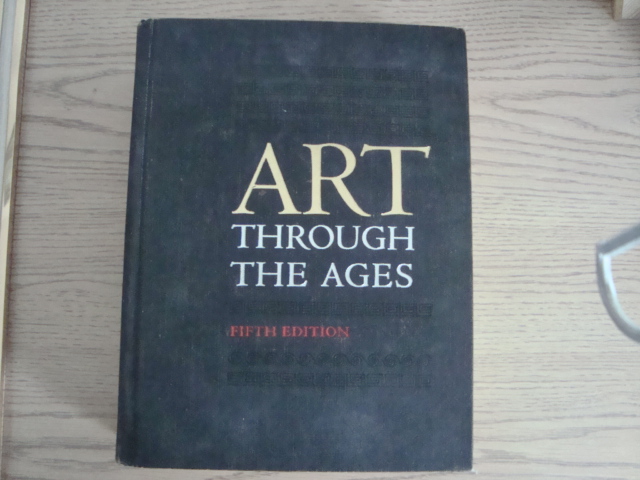
Gardner's Art Through the Ages fifth edition (1970)

        This was my textbook for my college Art History class in 1972.  It's a big book filled with photographs of great artwork throughout history and text that tells about it all.  A very nice book to own.

Stage Scenery (Gillette & Gillette)

        Even though I never took a class that required this book, somewhere along the line in my life I acquired it.  Maybe I found it in a used book store.  Who knows when it might come in handy for me.  Likely not, but I'm keeping it anyway.


Southern Writing 1585-1920 edited by Davis, Holman, & Rubin

       One of this book's editors, Richard Beale Davis, was one of my English professors at the University of Tennessee in Knoxville in the early seventies.  This stately old Southern gentleman was an award winning author who was part of the University faculty for many years.  I had him for Southern Literature and perhaps another class.  Being the rebellious young fellow that I was at the time I was not overly respectful of him or his teachings.  Now I have a better view of him, but still I didn't care much for his class.  I did think the textbook he used and which he also co-edited was worth keeping.  It is a bountiful collection of well-known writing as well as esoterica which includes essays, fiction, and poetry.  There's a heck of a lot of fine reading in this book.


Trevillian

       What is the significance of Trevillian?   This was my mother's maiden name.  Fortunately, as was the case on my father's family side, I had an aunt who compiled a sort of history about her family lineage.   Jean Trevillian Lough was an ardent student of history who did extensive research about her own family as well as other figures of history.  Now I don't exactly recall how the Scott family fit into the Trevillian line, but the Scotts take top billing in this book of genealogy.  My family and I all make appearances in this book.  I don't know how many copies were published but it's nice to own one for my home library.   I wish there would have been more about my grandparents' ancestry and the direct lineage that leads to me.  

A Genealogical History of the Scott Family: Descendants of Alexander Scott, Pioneer Settler of Augusta County, Virginia, C. 1750 and a History of Allied Families in Western Virginia by Jean Trevillian Lough, Josephine McCord Vercoe


Truman by David McCullough

     This is a highly regarded book by a well-respected author.  Not sure if I have any more of McCullough's books, but any of them would probably be nice to own and good to read.  Someday I'll read this book about the life of President Truman.


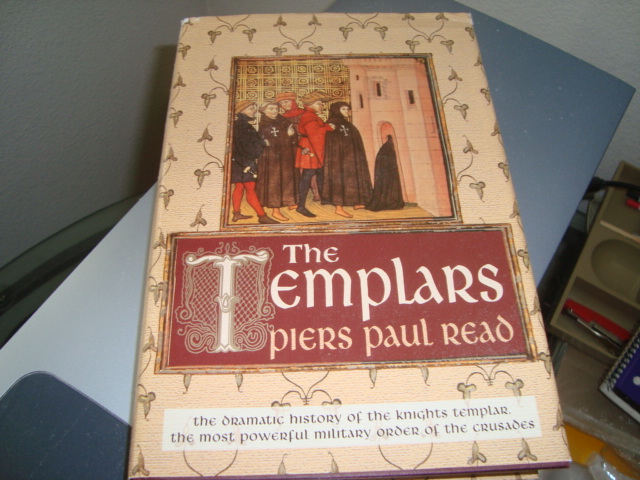
The Templars by Piers Paul Read

         This is one of the most recent books I've read.  The Knights Templar and the Crusades is a topic that interests me and I'd long been waiting to read this history.  Sadly I found it to be rather tedious reading.  It's a well-researched book filled with detail, but it gives a pretty good overview of that stretch of time.  I'll probably never read this book again, but for now I'll keep it on my shelves.


Mark Twain

        Twain is mostly known for his fiction, but therein lies lies many truths. Some literary pundits argue that The Adventures of Huckleberry Finn by Mark Twain is the greatest American novel.  That's what some of my literature professors in college said and that's when I bought a paperback version in the seventies.  It's probably still around the house somewhere, but now we also have this paperback version that we bought after visiting Hannibal Missouri a few years back.  My wife had never read it so we got this copy on our vacation for her to read.  It's a great book, but as controversial as ever I guess.


    Would you regard Huckleberry Finn to be "the greatest American Novel"?   If not, which novel would you choose?   Did you keep any textbooks from your school years?


Friday, August 26, 2011

Sparkfest! Part 3


            Today I offer my final topic for Sparkfest!.  Follow the link to find entries from other participants.

Is there a book or author that changed your world view?

            I was enthralled by science fiction in my earlier reading days.  I still recall in third grade having read a Robert Heinlein novel, the name which eludes me now, which sparked my imagination about the possibilities of literature.  The sci fi adventures of Tom Swift were a steady diet of reading that I consumed, along with the mysteries of the Hardy Boys.  

            Later, when I was in junior high school and had money of my own to spend, I joined the Doubleday Dollar Book Club and began reading a wider range of literature.  Taking advantage of the special introductory offers, I soon had memberships in the Science Fiction and the Mystery Book Clubs as well.  I was now buying books on a monthly basis and my library was expanding at a rapid pace.  

            Then, there were the books and other literature that we had to read for school.  The standard English curriculum usually provides a decent overview of literature that is considered great or essential reading for a college bound student.  I read, or at least gained an awareness of many of these works of literature.  Compared to other students where I attended school I think I was probably pretty well-read.

          After I started taking literature classes in college, my world view changed dramatically as far as literature.  My introduction to Southern Literature opened my eyes to a different way of writing and thinking than what I had previously been reading.   Now I listed my favorite authors as being Mark Twain, William Faulkner, and Cormac McCarthy among others.   I could relate to many of the things about which they wrote.

         When I was attending the University of Tennessee at Knoxville in the early 1970s, my creative writing professor Robert Drake introduced me to the author who would have the biggest affect on my world view and the way I wrote.  The author was Flannery O'Connor.  She had an accessible style that made her works easy to read, but her themes and stories were unique, almost like a Southern Gothic version of the Twilight Zone writing that had influenced me so much when I was younger.  O'Connor had written the types of things that were similar to what I had begun to write at that time.  I began to see that there was a place for literature that dealt with Christian issues without being overtly Christian literature.

          I like reading a good message, but I don't want it to be in my face.  A good story with a Christian theme can be told without the author preaching it.  O'Connor's stories are usually about people who are not especially good and sometimes pure rotten, but she raises questions that make the reader think.  I can read her stories repeatedly and always see a profundity in her message--a message which is not always immediately evident.  O'Connor entertained me with her stories, but provided me with mental nourishment which gave my mind something to chew on after the story had passed.

         Flannery O'Connor's writing made me realize that substantive religious writing didn't have to be a glowing feel-good story from Sunday school class.   Nor did writing stories with religious themes require scaring the reader with hell-fire preaching.  Sometimes a story can merely cause a reader to contemplate ideas that have universal application and to realize that many of us may have similar questions that may not always have the easiest answers.  Fiction should entertain, but it should also enrich us in some way.   Flannery O'Connor showed me that good fiction should have hidden layers and subtleties that make the stories stick with us long after we've read them.

         Are you a fan of Southern Literature?   Do you think fiction should contain a message that stimulates thinking?   Do you prefer a story that is obvious or one with underlying messages?    What was your journey as a reader like?


-
          

Wednesday, June 15, 2011

Everything That Rises Must Converge

           On Monday (6/13/11) I discussed the American author of Southern Literature Flannery O'Connor.  I was not surprised, but a bit disappointed in the number of commenters who had not read anything by her.   It is my hope that more of you will make a genuine effort to seek out her work and at least read a story or two.

           Writers of fiction are encouraged to not just write, but to also read, read, read.  They should not just read in their own genre or only current fiction, but they should also get at least an overview of the literary classics that have influenced today's literature and other arts.  We can learn much through what other authors have done with the craft of writing.

           Reading Flannery O'Connor is like a master class on how to write well. Her mastery of dialogue, description, and developing theme will leave you nodding in appreciation if not awestruck with the wonder of her genius.  Her stories are uniquely absurd, surreal, and at times may make you shudder with horror.

          The era of which O'Connor writes is one of change when the ways of the Old South were falling to the Civil Rights Movement and modernist thinking.  Many of her influences come from the Bible and a number of philosophers.  The stories she has written are like none you may have ever read before and may haunt you and make you think long after you have read them.  

           As I read the Brad Gooch biography Flannery: A Life of Flannery O'Connor I wanted to reread her stories since I had not read them for nearly thirty years.  I was distressed when I could not find my copy of   Flannery O'Connor: Collected Works.   Then, when my neighborhood Borders store was closing I found the short story collection Everything That Rises Must Converge on sale for a very inexpensive clearance price.  I grabbed it and my follow up read to the biography was in place.

           Flannery O'Connor's Everything That Rises Must Converge is her second and final collection of short stories which was published in 1965, a year after her death.  The book is a collection of nine stories, each one meticulously crafted into a masterful work of literature. The stories are bizarre and frightfully freaky in some cases.  Some are like Stephen King on literary steroids while others approach religious mysticism in a down South setting.

            The stories deal with issues of race and racism, class distinctions, and generational conflict.  A few of the stories fall into the realm of nightmarish Southern Gothic literature with endings that may make the reader cringe in horror. Other stories raise questions of social consciousness or religious doctrine.  However there is a beauty in the writing that makes a reader want to savor the words and envision the images portrayed.  The characters in the stories have been described as grotesque, and yet they are like people you may know or see in Walmart.  This is an amazing cast of characters that you will not soon forget.  These are stories that will haunt you.

           The story that is my favorite is called "Revelation".   Most of the narrative takes place in the waiting room of a crowded doctor's office.  The banter that ensues here is comically realistic in it's context, yet sad in the true content of what is being said as the group of people discuss the class rankings in society.  The final revelation of the main character left me with chills and wide eyes as a most amazing vision is described.  The vision has not yet left my memory and will be with me for a long time.  You have to read it to believe it.

         In the interest of keeping this commentary short I won't give any examples in the form of quotes, but many of O'Connor's stories can be found on-line (see links below).  If you are wary of purchasing your own copy of her books, you may wish to sample them first.  Then, if you like what you see, I encourage you to get your own personal copies of her books for your library.  If you are affected like I have been, you will want to read these stories many times.  There is much to be learned from her writing style and much to contemplate in the stories themselves.

           If you do read any of O'Connor's stories, please let me know what you thought--I'd love to hear some opinions.   If you have already read her work, what is your favorite story?


Here are some links to a few stories that can be found on-line:

A Good Man Is Hard To Find (text)

A Good Man Is Hard To Find  (audio as read by the author)

Revelation


xxxxxxxxxxxxxx