
This Is Me--2024 A to Z Theme

My A to Z Themes in the past have covered a range of topics and for 2025 the theme is a random assemblage of things that are on my mind--or that just pop into my mind. Whatever! Let's just say I'll be "Tossing It Out" for your entertainment or however it is you perceive these things.

Tuesday, August 17, 2010

Tossing It Out Tuesday: Ditching the Dog

      Florida Neighborhoods Invaded By Giant Pythons

          The southern area of Florida near the Everglades has been having a snake problem.  These are not the snakes that are native to the area, but giant non-native snakes like Burmese pythons.  The population of giant snakes in the Everglades is growing so rapidly that these snakes are starting to appear in neighborhoods near the swamplands, where they are a threat to pets and humans.  These are snakes that can grow to 20 feet in length.

           How did these non-native snakes show up in Florida?   They were once pets that had perhaps become too much for their owners or for some other reason tossed out into the wilds of the Everglades.  Perhaps the former owners thought they were showing the snakes a humane gesture by sending them into the wild.  Apparently these people did not realize or maybe they did not care that they were creating an imbalance to the ecosystem.  Now hundreds of these giant snakes are captured or killed each year.

                          Something's Fishy In The Ecosystem
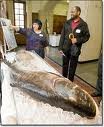
          The problem extends from the Everglades to other water systems of lakes, ponds, rivers, and streams as people have dumped non-native fish species.   Certain breeds of tilapia, carp, and other fish threaten the habitats of native fish and often are ruthless predators that threaten to eradicate other species. 

                                                 Fowl Play

           The story I heard about the duck pond in Alcoa, Tennessee was that people would buy their children baby ducklings at Easter and when the ducks got bigger they'd be taken to the duck pond and dumped.  What ever the true story may be, these birds have adapted well to their habitat and have not been a threat.  However, other exotic birds have either escaped or been turned loose into urban environments.  They too may have adapted, but there is concern as to the potential harm this situation could create.

                                                   Wild Cats    

            We might think of ocelots, bobcats, and cougars when we think of wild cats in the United States.  The bigger problem is the population of feral cats.  These cats may have once been pets that were abandoned or they may have just been born into the wild.  Sometimes un-neutered cats will spew out uncontrolled litters of kittens that are eventually turned loose.  These cats may roam in packs.  They can help control rodent populations.  Disneyland in Anaheim, California keeps a population of feral cats that are released nightly to control rodents (ironic for a kingdom ruled by a mouse).  But urban cat populations can also pose a nuisance and a health hazard.

                               The Responsibility of Pet Ownership 


         Many people take pet ownership rather lightly.   They do it for their kids, or because they think it would be cool to have a ferret, or a monkey, or some other animal.   Then when they discover the responsibility involved the novelty wears off.  There are the issues involving feeding, animal waste, veterinary care, grooming, and many other issues to consider.  Sometimes the easiest solution of pet disposal is to carry it off and dump it off at the side of a road somewhere-- bad idea!

          If you no longer want a pet, see if you can find someone who you know and trust to take the animal.   Do not just give it away to any stranger who claims they will give your pet a good home.   You don't really know what kind of plans they have in store.

           Contact  a veterinarian or an organization like the ASPCA for advice.  Realize that the animal may end up being euthanized, but at least an effort will be made to find the animal a home.  Some pet shops may take your unwanted pet.  If the animal is exotic, like the Burmese Python, offer to give it to a zoo--they may be able to find a place for it.   If you feel that you must toss out a pet, then toss it out the right way.

            The bottom line is to realize what you're getting into before you take a pet as your responsibility.  Be aware of the costs and upkeep of the animal, the eventual size it will attain, what kind of personality the animal might be expected to have--in other words, be ready for whatever problems you might encounter and ask yourself truthfully if you want to deal with all of that.   A pet is not your personal plaything or your child's toy, but it is a living creature.

            What pets do you own?   Have you ever had a pet run away or disappear, never to be seen again?  Do feral ex-pets live around your home?   Do they cause any problems?   What is the strangest pet that you or someone you know has?    What is your opinion of owning exotic pets?


Monday, August 16, 2010

Blog Boggled: Dogging the Blog Topic


Making Progress!

        Last Tuesday my New Email was registering at 1150.  Now I'm at 267!  I'd call that some progress, eh?  Granted that I now have 34 file folders, at least now the email is much more organized.  Most of the files have 20 or less items in the folder so I'd say that's not too bad.  Now as the emails come in I can either act upon them immediately and delete or send them to a file to be dealt with later.  The remaining 267 will either go into files or be deleted soon--I now do have a system set up. 

          Pet Topics (Blogs That Is, Not Dogs)

         Most of us have posted on the topic of blogging at one time or another.  I certainly have--I have this continued Blog Boggled series which is an ongoing look at blog science and philosophy.   We all want to know how this blog thing works and what we can do to make our experience better.  Last Thursday the most common questions were raised again by Alex J. Cavanaugh.

          Alex was wondering about Blogging Idiosyncrasies -- the usual suspects that we never tire of hearing about.   In the interest of keeping my post shorter I won't go into the topic of posting length, frequency, or time of day.  If you are a regular reader you already know that I'm here daily early in the morning for North American readers.  But do I briefly want to revisit Alex's final concern.

                           Comments
                        
        We can all pretty much agree that the comments we receive depend to a great extent upon the quality and length of the post, number of followers, and our history of establishing a relationship with readers with our responses to their comments.  And of course our reaching out to comment on other blogs probably has the biggest impact on the quantity of comments we receive on our own.

        Dezmond mentioned the term blog-whoring--brief comments with little substance left merely to show a presence and try to entice others to come to their blog.  He requested quality comments rather than trying to leave a quantity of less substantial comments.  Those quality comments are wonderful to receive and I really appreciate when visitors leave them.  It's especially good on my Debate Day topics when I am looking for persuasion and information.

        Clarrisa Draper pointed out that she has a difficult time commenting if a blogger hasn't prompted readers with questions.  She says in those cases she may merely leave a comment like "nice post".

         Simon C. Larter suggested that bloggers get  more comments "when you say something controversial, or just plain ludicrously silly."   I'd say yes and no to that one, but overall I think Simon's got it right.

         I think we'd all agree that time is the biggest factor when it comes to commenting.  Even being unemployed I find it virtually impossible to read and comment on every blog that I follow.  And when I do comment I have a tendency to strive for quality as much as possible which often means length.  This is one reason that my email box stacks up.

         What inspires you to leave a quality comment?  When do you usually just leave a "hi, I was here" type comment?   Does "something controversial, or just plain ludicrously silly" put you off, or does it incite you to leave a comment?   If the topic is too difficult or complex do you avoid leaving any comment?   Do you find it difficult to leave a comment if the blog author doesn't prompt you with questions?  About what percentage of the time do you just read and move on without commenting and what is your reason for doing so?

          Quality comments are appreciated, but I'll also gladly accept nice compliments, passing hellos, blog whoring, snarky remarks, and doggie barks.

(631 words )

Sunday, August 15, 2010

God Cares About Us

       We have seen Jonah, the Hebrew prophet of the Almighty God, run away from his call from God only to be turned around to do what God called him to do.   Jonah reluctantly brings the great city of Nineveh to its knees in repentance and saves the people from destruction.   Angry, he goes off into a desert place still thinking that the destruction may come.  While he waits God causes a giant vine to protect Jonah from the burning sun.  Then as quickly as the vine came into being, it is destroyed by a worm that God sends followed by a scorching wind.  In his discomfort Jonah becomes angry again and wishes he were dead.

       But God said to Jonah, "Do you have a right to be angry about the vine?"
       "I do," he said. "I am angry enough to die."  
       But the LORD said, "You have been concerned about this vine, though you did not tend it or make it grow. It sprang up overnight and died overnight.  But Nineveh has more than a hundred and twenty thousand people who cannot tell their right hand from their left, and many cattle as well. Should I not be concerned about that great city?"
Jonah 4:9-11 (New International Version)

         God asks a simple, straightforward question and Jonah gives his emotional response.   Then comes God's very simple and basic lesson for Jonah.  The vine that first miraculously appeared to shade Jonah and then was eaten by a worm was in essence something rather petty.  Jonah did not plant the vine or cultivate it to grow as it did, the vine merely grew overnight and died as quickly as it had grown.   The fact that the vine's shade had provided comfort to Jonah made him upset when this vine died since now he would be uncomfortable without the shade it had given him. 

           God points out the relative insignificance of this vine and this event from His perspective and how it all relates to the world.   Jonah's caring about this lowly vine is from a very selfish point of view.  Jonah only cares about the destruction of the vine because of the discomfort its loss brought to him.   The vine is only a temporal soulless plant in the desert and its loss will not affect anyone in the broader scope of things.

           On the other hand, the destruction of a large population of people and even their animals is something significant to God, as it should also be to Jonah.   The prophet should have a greater understanding of God's character and an unwavering sense of duty to answer God's call without question.  If Jonah should be so caring about a mere vine, does it not make sense that God would be caring about the children of His creation. The message that God wanted Jonah to impart to the people of Nineveh and to all who would hear the story of Nineveh is that God cares for all of us.   He does not want to destroy us for being sinful, but he wants us to have a chance to recognize our sinfulness and repent for it.  Jonah, as well as all of us, should be rejoicing and thanking God for his mercy upon all of us.

          "But if a wicked man turns away from all the sins he has committed and keeps all my decrees and does what is just and right, he will surely live; he will not die.  None of the offenses he has committed will be remembered against him. Because of the righteous things he has done, he will live.  Do I take any pleasure in the death of the wicked? declares the Sovereign LORD. Rather, am I not pleased when they turn from their ways and live?
Ezekiel 18:21-23 (New International Version)